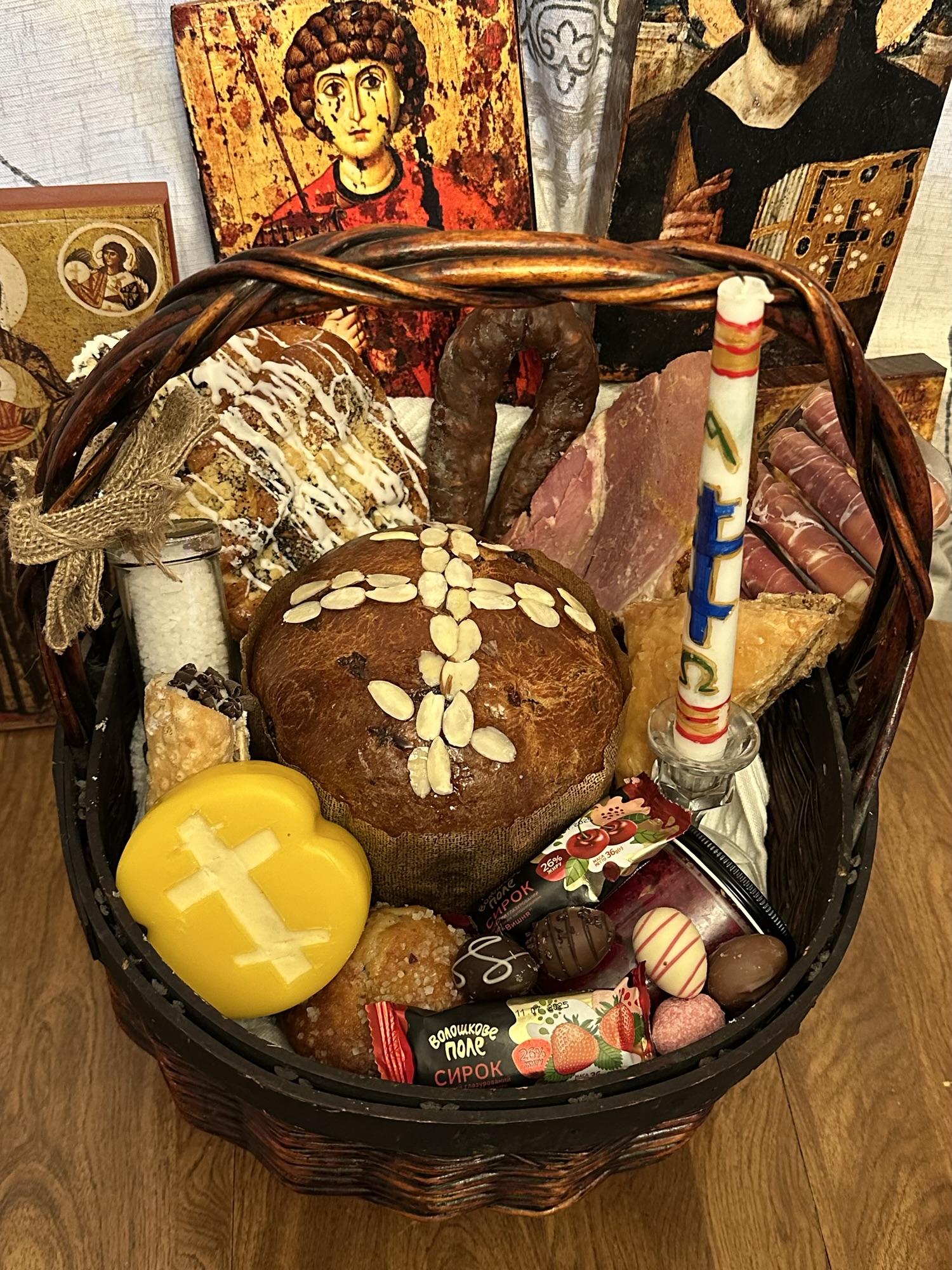

It’s that time of year again: the weather is warm, baseball season is on, and of course, it’s Easter! In this weekend of festivities, you’re probably catching up on spring cleaning, dressing up in your Sunday best, and enjoying some sun outside while kids run around collecting eggs for their Easter baskets… or perhaps you’re baking Paska bread for the Pascha basket?
With all the celebrations going on, you might be wondering what the differences between Easter and Pascha are, and if they’re even different at all. Like most things in life, the answer is… yes and no. But not to worry, we’ll break it down for you in today’s blog all about the rich traditions behind Easter and Pascha.
Are Pascha and Easter the same holiday?
Yes, Pascha and Easter are the same holiday: both celebrate the resurrection of Jesus Christ. However, Pascha and Easter have some differences in tradition, and Pascha is the name given to what can also be called “Orthodox Easter”. For both Orthodox Christians and other Christian denominations, it is the most important holiday in the calendar. Sometimes people use the words Pascha and Easter interchangeably since after all, they refer to the same holiday!
Do Easter and Pascha happen at the same time?
Not always. They rarely happen on the same Sunday, and they can be anywhere from 1 to 5 weeks apart. However, in 2025, when this article is being written, they both fall on April 20th!
Why are they usually at different times? Well, both Orthodox Christians and other denominations determine the date of the holiday using the same method: it must be the first Sunday of the first full moon after the vernal equinox. However, the Orthodox Church uses the Gregorian calendar to find the date of the vernal equinox while other denominations use the Julian calendar. Additionally, the Orthodox church celebrates Pascha only after the Jewish Passover. If the calculated date for Pascha would happen during or before the Jewish Passover, it is moved to happen a week later. Other denominations do not follow this rule, so they may celebrate Easter at the same time as Passover or before.
What is the origin of the terms “Easter” and “Pascha”?
There’s some debate over where the word “Easter” comes from. One possible origin is that the term comes from the name of a goddess Anglo-Saxon pagans believed in, called Eostre, and so some argue that we should not refer to the holiday as “Easter” because it potentially comes from Pagan beliefs. However, there is no references for the idea that anyone ever believed in Eostre in any capacity except for a single scholar, the Venerable Bede. That doesn’t mean it’s impossible that it’s the origin of the term as all other sources for Eostre could have been lost to time, but it means it’s less likely it’s where we get the term. Another possible explanation is that the term “Easter” comes from the Germanic word for dawn, which is related to the word for East since the sun rises in the East. The word for dawn was part of the name of the month we now call April, so it could be that Easter was simply named for the month it most commonly falls in.
The term “Pascha”, however, has a much simpler explanation. It has the same origins as the word “Passover”: the Hebrew word “Pesach”.
What are the similarities and differences between Easter and Pascha celebrations?
First of all, both in Orthodoxy and in western traditions, the holiday is the time of year when new converts are welcomed to the Church. Both groups will also read scripture related to the holiday at this time, and attend Church for good Friday as well as the holiday celebration on Sunday. Both the Orthodox Church and other denominations practice fasting in preparation for the holiday, as well as the other two pillars of Lent: Prayer and Almsgiving. Both groups typically eat desserts and other foods they refrained from while they were fasting to celebrate, although which foods depends on the country or culture that is celebrating. In Ecuador, Fanesca soup is eaten with 12 different grains and beans to represent the apostles. In Finland, they eat a dessert called mӓmmi, made from molasses and rye flour and served chilled with cream. The UK and USA enjoy hot cross buns.
We’ve gone over a lot of similarities, but there are several differences as well. For example, you won’t find a man in a bunny costume entertaining children at Pascha celebrations– it’s firmly a western tradition. The eastern tradition dyes their eggs red and paints them with intricate patterns, while in the western tradition you’ll see eyes in a wide array of colors. Pascha baskets contain bread, meats, and cheeses, while Easter baskets are usually full of candy.
There’s also differences in how the baskets are enjoyed: for Easter, baskets are typically only given to children, and they may or may not be combined with the tradition of the egg hunt. They’re filled with candies like hollow chocolate bunnies and jellybeans, and that very basket is likely the one the kids use to hunt for dyed eggs hidden around the home or outdoors. Some might also give the children an empty basket, which they use to collect colorful plastic eggs filled with candy.
While Orthodox churches can put on an egg hunt, especially in countries where it’s particularly common such as the USA, it is not originally a part of eastern tradition and not every Orthodox church does it. Pascha baskets are filled with Paska bread, as well as meat and cheese, and often desserts as well. They can also have candy, but it’s not the central item of the basket. It’s traditional to tie a burlap ribbon around the handle. People of all ages put together Pascha baskets and present them at church on Holy Saturday, where they are blessed and enjoyed potluck-style: everyone tries the goodies in each other’s baskets, and everyone takes home whatever is leftover to eat instead of having to cook the next day.
This is another difference between Easter and Pascha: for Easter, it’s traditional to make a large meal, eaten with family and friends. For Pascha, the leftover Pascha baskets are eaten rather than cooking a meal.
Conclusion
Easter and Pascha share many traditions but also each have their own unique traditions, with variations by country. They can be, but are usually not celebrated at the same time and often the date is different by between 1 and 5 weeks. Both Easter and Pascha celebrate the resurrection of Jesus Christ and are the most important holiday in the Christian calendar. We hope that whether you celebrate Easter or Pascha, your holiday celebrations are filled with blessings and joy!


Leave a Reply